


In today’s interconnected world, businesses are increasingly operating on a global scale, with teams spread across different countries and time zones. Effective communication is essential for fostering collaboration, boosting productivity, and maintaining employee engagement within an international workforce.
Effective communication with a global workforce requires clear language, cultural awareness, consistent communication protocols, and scalable translation strategies. This article outlines eight practical ways for organizations to improve collaboration, engagement, and compliance across multilingual, geographically distributed teams.
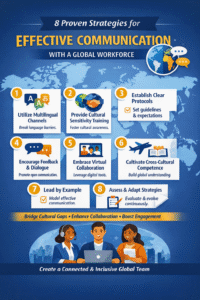
This article is intended for HR leaders, internal communications teams, learning and development professionals, and compliance stakeholders who communicate with multilingual or globally distributed employees. To help you navigate the challenges of cross-cultural communication, consider implementing these eight practical strategies.
1. Utilize Multilingual Communication Channels
To support language accessibility across teams, embrace diversity by offering communication channels that accommodate various languages. Utilize multilingual platforms for emails, internal memos, and company-wide announcements to ensure all employees can access information regardless of their native language.
In practice, implementing multilingual communication channels requires careful planning and consideration of language preferences, technological capabilities, and budget constraints. A helpful first step is identifying the languages spoken across your workforce and selecting communication platforms that support multiple languages. Provide language training or translation services as needed to ensure effective communication across language barriers.
A comprehensive corporate communications strategy can’t be effective without a defined mission statement. If you don’t already have one, take some time to write your company, firm, or organization’s mission statement. Clearly explain what you’re about and state some short and long-term goals. Then, think about what you need to achieve those goals, measure progress, and how an effective communications strategy can help you.
For example, do you want to encourage teamwork? Gratitude? A little healthy competition? The more specific you can be about your goals and the more you can quantify them, the easier it will be to measure success and failure down the road.
2. Provide Cultural Sensitivity Training
Cultural differences can impact communication styles and norms. Offering training sessions can help raise awareness about cultural nuances, etiquette, and communication preferences across different regions. This helps employees understand and respect each other’s perspectives, fostering a more inclusive and harmonious work environment.
As teams span regions and cultures, cultural differences often extend beyond language to include communication styles, hierarchy, nonverbal cues, and attitudes towards time, which can significantly impact how individuals perceive and interpret messages. Understanding these cultural nuances and adapting communication strategies accordingly is essential for fostering effective cross-cultural communication within a global workforce.
Familiarize yourself with each foreign office’s culture and communicate with employees in ways that respect their culture. A straightforward example is the holiday season: not everyone celebrates the same holidays at the same time. Instead of sending a generic “Merry Christmas” greeting to all company offices, send holiday-appropriate cards to overseas employees for Ramadan, Rosh Hashanah, or Chinese New Year.
For organizations navigating regulatory, legal, or safety-critical internal communications, our guide “How to Build Compliant, Clear Internal Content for the Multilingual Workplace” explores how to structure multilingual content that remains consistent, compliant, and easy to scale.
3. Establish Clear Communication Protocols
Once teams are aligned on language and cultural expectations, establish clear guidelines and protocols for communication within your organization. Define expectations for response times, preferred communication channels, and appropriate language and tone. This ensures consistency and minimizes misunderstandings, especially in virtual or remote work settings.
To keep distributed teams engaged, encouraging active participation and feedback from remote team members requires fostering a supportive, inclusive communication culture. Provide opportunities for virtual team meetings, brainstorming sessions, and informal discussions to facilitate interaction and collaboration. Encourage the adoption of collaboration tools and platforms that enable remote employees to contribute ideas and feedback in real time.
4. Encourage Regular Feedback and Dialogue
With clear protocols in place, foster an open and transparent communication culture by encouraging regular feedback and dialogue among team members. Provide opportunities for employees to share their thoughts, ideas, and concerns, regardless of their location or time zone. Actively listen to feedback and address any issues promptly to demonstrate your commitment to employee engagement and satisfaction.
In virtual environments, improving communication involves leveraging technology, establishing clear communication protocols, and fostering a sense of community among team members. Encourage regular video conferencing meetings, use collaboration tools for project management and document sharing, and establish guidelines for virtual communication etiquette to enhance clarity and effectiveness in virtual interactions.
5. Embrace Technology for Virtual Collaboration
As teams collaborate across time zones and locations, leverage technology to facilitate virtual communication among remote teams. Use video conferencing tools, project management platforms, and instant messaging apps to bridge geographical barriers and promote real-time interaction. Encourage the use of visual aids and multimedia content to enhance engagement and understanding during virtual meetings and presentations.
Addressing language barriers requires a combination of language training, translation services, and multilingual communication tools. Provide language training opportunities for employees who need to improve their language skills and offer translation services or access to multilingual resources for effective communication across language barriers.
More people view content on their phones than on desktop computers in today’s world. Corporate communications should be designed to work optimally on mobile platforms – especially if your organization has remote workers or employees who travel frequently for business. To ensure an optimal mobile viewing experience, make sure your content is responsive and let your employees know about any relevant mobile apps they need to download for proper viewing (e.g., Outlook, Salesforce).
6. Cultivate Cross-Cultural Competence
Over time, encourage employees to build cross-cultural competence through ongoing learning and exposure to different perspectives. Opportunities such as cultural sensitivity training, language courses, cross-cultural exchange programs, or international assignments help employees develop greater cultural awareness, empathy, and adaptability. This deeper understanding strengthens communication, fosters mutual respect, and supports more effective collaboration across global teams.
7. Lead by Example
At the leadership level, set the tone for effective communication by leading by example. Demonstrate active listening, empathy, and clarity in your communication style. Be accessible and approachable to all employees, regardless of their location or background. By modeling effective communication behaviors, you inspire trust and confidence among your global workforce.
Effective communication with a global workforce requires leaders to demonstrate empathy, clarity, and inclusivity in their communication style. Lead by example, prioritize active listening, and tailor communication strategies to accommodate diverse cultural and linguistic backgrounds. Be accessible and approachable to all employees and solicit feedback regularly to ensure effective communication and engagement.
Partnering with a Language Service Provider can help ensure employees across all offices clearly understand critical communications. Translating important employee communications is legally required in many countries. An LSP can also help assess the appropriateness of text, images, and colors for different cultures. Sending culturally appropriate content in your employees’ local languages will ensure compliance with local language laws and make everyone feel valued and included in the company culture.
8. Regularly Assess and Adapt Communication Strategies
As global teams evolve, continuously evaluate the effectiveness of your communication strategies and adjust as needed. Gathering employee feedback, conducting surveys, and tracking engagement metrics can help identify what’s effective—and where improvements are needed. Staying flexible ensures communication remains relevant, engaging, and aligned with employee needs across regions.
Real-world examples highlight the impact of continuous evaluation and adaptation. The case study “From Chaos to Clarity: How a Global Fast-Food Chain Scaled Training Across Borders” shows how strategic translation helped transform fragmented training into a scalable, consistent multilingual ecosystem, supporting faster rollouts and global growth.
Beyond strategy, format and delivery also matter. Many organizations find success with “snackable” content: short, visually engaging messages that are easy to consume. Infographics, for example, support visual learning and can significantly increase engagement, making internal communications feel more accessible and effective.
Conclusion
Being intentional with company-wide communications further strengthens impact. Employees often value transparency and appreciate updates on business performance, organizational goals, and relevant industry context. In multi-site organizations, tailoring content to resonate across locations, not just at headquarters, helps foster alignment and inclusion.
By applying these strategies, businesses can reduce communication barriers, strengthen collaboration, and support a more engaged global workforce. Effective communication not only drives productivity and innovation but also plays a key role in employee retention in an increasingly interconnected world.
For additional guidance, explore our guide “How to Optimize Your Global Business: For HR Professionals.” If you have questions or would like to learn how Morningside can support your global communications, contact us to get started.
About Us
Morningside, a Questel Company equips the world’s leading corporations with a full suite of end-to-end translation and localization solutions for their corporate compliance needs. Our language services ensure your ideas and policies are seamlessly communicated to your employees, partners, and customers and meet all local and cultural requirements.

Danny Fink is a leader in the language services industry, serving as the Director of Business Development at Morningside. He strategically aligns himself with multinational companies, educating clients on best practices and delivering measurable results through innovative approaches. Known for his enthusiasm and energy, Danny drives sustained business growth and has received numerous accolades for his expertise. Danny's leadership has expanded Morningside's reach and strengthened its mission to bridge language barriers. Passionate about effective communication, he empowers clients to succeed in a global market.