
Category: Translation
Five Benefits of Single-Source Authoring for Technical Translation
Single-source authoring is a methodology commonly used by technical writers to increase the re-use of existing written content instead of rewriting information. When preparing materials for marketing abroad, single-source authoring software can make a significant difference in reducing the amount of technical translations you will need to complete for foreign audiences.
Take the example of a technical writer working at a company that makes a line of glucose monitoring devices. The devices all perform similar functions, but have slightly different features. The operation of all the monitors is very similar. It doesn’t make sense to write five separate user manuals and then translate those documents. It makes more sense to write the content once and then include any additional information to cover the unique features of each model. For example, the topic “Turning on your glucose meter” may be the same for all five models while “Calibrating your meter” may vary by model. In a single-source environment, the topic “Turning on your glucose meter” would appear only once, but “Calibrating your meter” could have different versions.
Now that the concept of single-source authoring is clear, let’s look at five key benefits of this methodology:
1. Better consistency
For technical document translation, consistency is critical for the efficient delivery of instructions to the user of software and equipment. There is little benefit to writing unique prose to describe repetitive tasks. It is important to maintain a consistent, predictable style, along with consistent use of terminology. Single-source authoring helps achieve this by focusing on the re-use of content. As in the glucose meter example, why write five different versions of “Turning on your glucose meter” when the only difference between the versions might be the model name? Write it once and insert a variable for the model name. Depending on which version of the manual you are publishing, your authoring tool can automatically substitute the correct model name.
2. Reduction of repetition
Repetition of content you have already written not only takes up space within your authoring environment, it also introduces the risk of publishing inconsistent information if one instance of a repeated passage is modified in one location, but not another. With single-source authoring, a given chunk of text is managed in one location and then its use is automatically multiplied across various documents by your authoring tool – saving you a lot of effort.
Another important issue for technical translation projects is avoiding the need to translate the same content twice. High-quality translation companies already have ways to address repeated text efficiently (through translation memory and preferred terminology lists), but there is still a cost to process each instance of repetition. This can be avoided by using single-source authoring, since each instance of text is unique.
3. Flexible output options
Single-source authoring tools enable authors to publish to myriad formats. MadCap Flare, for instance, allows automatic publishing to the following:
- HTML5 Webhelp (PC and Mobile)
- Eclipse Help
- WebHelp
- WebHelp Plus
- XPS
- Adobe Framemaker
- MS Word
This can literally be done with the click of a button. That is why single-source authoring software is also known as multi-channel publishing software. For example, imagine that you have a Help System for your company’s software product. You can automatically create a version that can work on users’ computers and mobile devices along with a PDF version that they can print – all using the same set of source files. You don’t need multiple copies of your content to generate these various formats.
Simultaneously, your technical translation agency can generate professionally translated versions of your documents using the same source files you used to produce your (English) originals.
4. Centralized control of critical data across multiple regions
By taking control of your content in a single-source environment, you can guarantee global standards. If all your technical document translations are based on the same set of original files using the same structure, you can more confidently publish into multiple languages, knowing which results to expect. This includes control of your intended message as well as the look and feel of your documents. To achieve this 10 or 15 years ago was difficult and time-consuming. Now it still takes effort, but it’s a fraction of what was required in the past.
5. Reduce desktop publishing costs
When using single-source authoring, the source project you create will contain all your design choices for page layout, logo placement, fonts and respective styles. Most single-source authoring tools leverage the use of CSS (Cascading Style Sheets) technology. CSS standardizes styles across your whole documentation environment. Your CSS can even be internationalized so that the right fonts are used for specific languages (this is critical for logographic languages such as Chinese and Japanese). By centralizing control of design decisions, it is possible to automatically generate foreign language translations of your original documentation that require very little manual desktop publishing. Traditional document formats (MS Word, Framemaker, InDesign, etc.) that are translated typically require labor-intensive desktop publishing, which can cost as much as 30% of the cost of translating documents. When using single-source authoring, this cost drops to less than 10% of the cost of translation.
Implementing single-source authoring
Some of the most popular tools for single-source authoring are MadCap Software’s Flare, Adobe RoboHelp, or Adobe Framemaker. Once implemented correctly, single-source authoring can increase your company’s publishing capabilities while lowering costs for all your technical translations and communications.
Get the latest insights delivered to your inbox
4 Translation Errors that Cost Millions
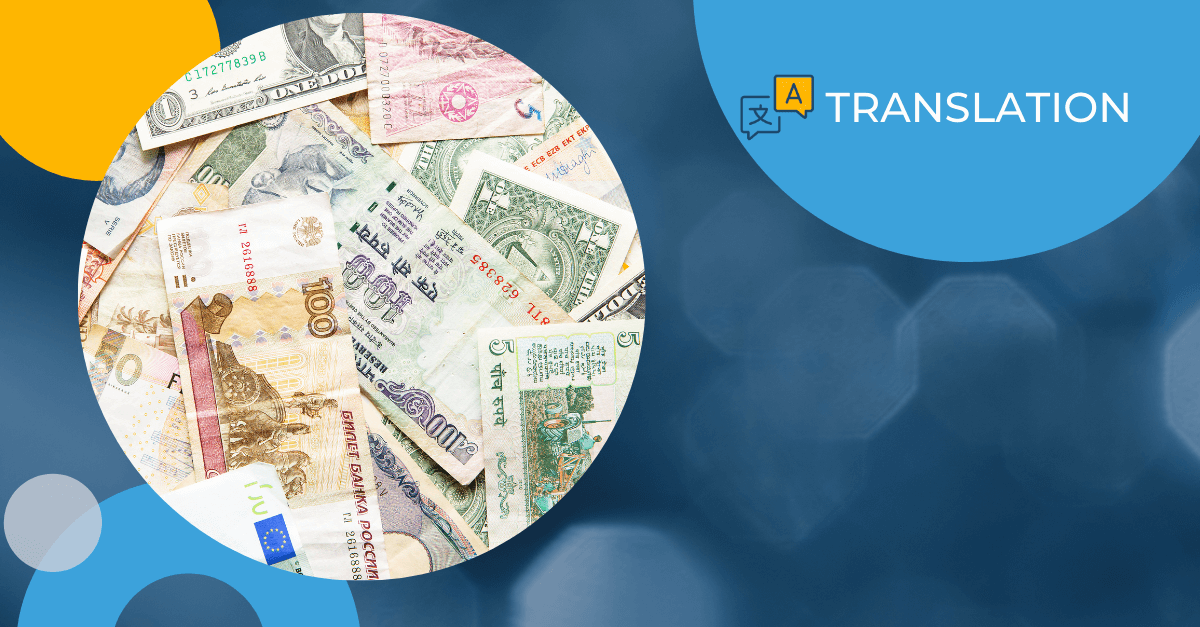
Inaccurate translations can be very costly. In the best-case scenario, a translation error is caught and only requires correction. In the worst-case scenario, errors can expose you to financial liability, disputes or even lawsuits.
Getting translations performed by the cheapest vendor is a common rookie mistake. Errors produced by low-cost translation services can prove far more expensive in the long run. The four examples below demonstrate the potentially high-priced consequences of imprecise or unreliable translations.
1. Malpractice settlement awarded to quadriplegic (Price tag: $71 million)
Eighteen-year-old Willie Ramirez became a quadriplegic due to a hospital misdiagnosis. The settlement resulted from the mistranslation of a single word.
Ramirez was brought to the hospital in a comatose state by his family. The Spanish-speaking family explained they believed he was experiencing a reaction to food poisoning, using the word ‘intoxicado’ to explain that he was poisoned. In Spanish, the word refers to anything ingested that makes a person sick. The interpreter, however, translated the word as intoxicated. Doctors treated him for a drug overdose, overlooking the real problem – bleeding in the brain that continued for days, resulting in his complete paralysis.
2. Sharp backtracks on faulty translation (Price Tag: Stock fell by 10%)
Announcing net losses usually hurts your stock price, but when Sharp, the Japanese electronics giant, warned in a statement about its own negative cash flow, a translation into English sounded the alarms much louder than the company intended.
While the original Japanese statement asserted confidence in the company’s future despite the losses, the English version of the statement declared that the company’s brain trust held “material doubt” about its future as a going concern. The corrected statement, issued a few days later, made it clear that the company had “no uncertainties” about its ability to continue. Unfortunately, the damage was already done. Sharp’s stock fell by 10% before rebounding a few days later.
3. Spanish packaging error results in costly food recall (Price Tag: approx. $10 million)
Mead Johnson was forced to recall 4.6 million cans of baby formula in 2001 because Spanish language instructions on the side of the packages were wrong. The incorrect mixture of powder and water was dangerous and could lead to seizures, an irregular heartbeat and even death in infants. The product had to be recalled immediately.
The recall was enacted quickly enough to prevent liability, but the scale of the preventative action came at the cost of a significant recall – setting Mead Johnson back, at a minimum, $10 million in direct costs (including retrieval, storage and destruction of the recalled product) plus the unquantifiable costs of a damaged reputation and lost future sales.
4. Imprecise translation leads to huge award (Price tag: $1.76 billion)
A tribunal hearing the case of Occidental Petroleum Corporation vs Ecuador ruled against Ecuador, awarding the petroleum company nearly $2 billion. The Ecuadorian representative claimed the huge award would have been significantly lower had the tribunal had access to better translations of Ecuadorian Supreme Court judgments and documents.
Initially, Occidental had reached an agreement with Ecuador to explore regions near the Amazon for oil. The tribunal’s judgment determined that Occidental breached its agreement with Ecuador by not soliciting approval from the participants of their farmout agreement. But terminating the initial agreement was deemed to be disproportional, resulting in an enormous award to Occidental.
In a dissenting opinion, Ecuadorian representative Professor Brigitte Stern blamed poor translation for the unparalleled monetary sum. “Had the translations…been correct and the original Spanish texts been really taken into account, the conclusions arrived at by the majority would have been impossible to sustain,” she wrote (paragraph 78).
Spend at the beginning, not the end
Each of the abovementioned, high-priced consequences could have been avoided had the initial translations been obtained and prepared properly. Ultimately, the price of failing to produce quality translations is significantly steeper than performing the translations appropriately at the outset.
The best way to prevent costly translation errors is to have your documents translated by a professional, vetted translator or language service provider (LSP). This ensures that documents are prepared accurately and will be able to withstand thorough review. Remember, while high-quality translation services may be more expensive, they are still far less expensive than translation errors that can literally cost you millions.
We Can Help
Morningside equips the world’s leading organizations with accurate, high-quality, professional translation services. We specialize in highly regulated industries, including legal, life sciences, corporate compliance and IP. We help your ideas reach new markets and audiences while allowing you to do more with your budget. Our global network of 8,000+ vetted translators includes subject matter experts (SMEs) in various technical fields and practice areas. Morningside is supported by industry-leading technology and a quality management system certified to the latest ISO 9001, 13485 and 17100 standards. We translate complex materials into 200+ languages for Global 500 companies, international law firms, and regulatory bodies.
Get the latest insights delivered to your inbox
When to Use Certified vs Notarized Translations

If you need to get a document professionally translated, you may be asked to provide proof that you used a qualified service. This proof usually comes in one of two forms: a certified translation or a notarized translation. The differences between the two – and when they are used – are significant.
Certified Translation
A certified translation means that the LSP or translator has provided a signed statement that the translation is a true and accurate translation of the original. Certified translations are usually required for legal documents such as business contracts, court transcripts, immigration documents, adoption agreements, and birth, death, or marriage certificates.
A certified translator and a certified translator are not the same thing. A certified translator is a professional translator who has passed an exam and received certification from an organization like the American Translators Association. However, a translator doesn’t need to be certified in order to provide a certified translation. Any qualified translator or LSP can provide a certified translation by signing and attaching a certificate of accuracy to the completed translation.
Notarized Translation
A notarized translation is less about quality control and more about following official procedures. A notary public is a person who is authorized by the government to oversee and authenticate various legal formalities – one of them being notarized translations. Notarized translations are usually required for education-based documents like high school transcripts or foreign diplomas.
Any self-proclaimed translator can take their work to a notary public, swear an oath to its accuracy and sign an affidavit. The affidavit will be considered valid once the notary public has signed it and put his or her official seal on it. The translator does not have to be certified and the notary does not assess the quality of the work – they verify the translator’s identity, but that’s about it.
Use one, not both.
Today, it’s usually one or the other that is required – either a certified or a notarized translation, but not both. This was not always the case, as just a few years ago the U.S. Citizenship and Immigration Services (USCIS) required that all certified translations also be notarized. However, the USCIS has since changed the rules and dropped the notarization requirement, making certified translations the standard U.S. requirement for all immigration purposes.
If you need help preparing certified translations or notarized translations, contact Morningside and we will be glad to assist.
Get the latest insights delivered to your inbox
Breaking Down the Language Barrier with Auto-Translation
While browsing the web, you may have come across a website written in a foreign language and attempted to use the ‘one-click’ translation function in your browser to instantly translate the text on the page. This is one way the ecommerce world has attempted to break down the language barrier with auto-translation.
Once the text has been translated, you were probably able to understand some of what the web page is saying, but many words or phrases likely made little sense. This is typical of end-users’ experience using auto-translation: it can be useful to get the gist of what a website or document is saying, but the quality is typically not very sufficient to get a clear understanding of what is written. What is worse is that vital information can easily be misinterpreted.
How does Auto-Translation work?
Auto-translation programs (such as Google Translate) work on a phrase by phrase basis, using a statistical algorithm to determine the meanings of words. In the case of Google’s translation tool, a back catalog of already translated texts is used. The algorithm analyzes the sentence against these texts to give the best result. The result depends on the quality of these translated texts, potentially leading to mistakes and awkward phrasing.
Auto-Translation of the Future
Auto translation technology is still in it’s infancy, with new technologies being developed and released regularly. The new technology we’re most excited about is the move towards neural machine translation (NMT). This approach to machine translation is structured in a similar way to the human brain and use complex calculations to select the appropriate translation. Unlike conventional machine translation, every component of the neural translation process is trained to maximize translation performance. Rather than simply translating the sentence word-for-word, this auto-translation technology can learn metaphors and idioms and their foreign language equivalents. This technology is still in its infancy, and represents a radical departure from standard MT approaches. If it proves successful, this technology will produce far more accurate translations and could render human translation a thing of the past.
Instant Translation Technology
The move towards highly accurate, instant machine translation would represent a significant step forward when it comes to communicating across languages. Both Google and Facebook are investing heavily in this new technology, which would significantly improve the user experience by providing automatic translation of ads as well as posts and messages.
Auto-Translation is not Foolproof
Currently, auto-translations are still not good enough to be used in professional settings. There are enough real-word examples of humorous and sometimes embarrassing translation mistakes on signs, product labels and menus around the world to remind us of the risks and potential fallout of relying on online auto-translation tools alone.
For the time being, in order to get a clear, accurate translation, your best bet is to have your document or website translated professionally by a native speaker of the target language. This ensures that the translation will be easily understood, culturally relevant, and avoid the misunderstandings and embarrassment that can result by using auto-translation software.
Get the latest insights delivered to your inbox
5 Tips for Translating Technical Manuals
A technical or user manual provides critical information on using your product to consumers. If your consumers are non-native English speakers, then it is equally important to translate your technical manual into your end-users’ native tongue. Whether it’s user instructions for the latest smartphone, a maintenance manual for a complicated piece of machinery, or a user guide for new software, having an accurately translated technical manual will help clients make the most of the product or service and ensure their correct use of the product. It also helps limit your liability in the event that the product is used incorrectly, saves time for your customer support team and acts as a springboard for sales. Translating your technical manual may even be required by foreign regulatory bodies in order to sell your product in their jurisdictions.
But translating a technical manual is no easy task. Technical manuals tend to contain a lot of jargon, and if the product or service is newly developed, it may even contain vocabulary that has no direct equivalent in the target language. A literal translation simply won’t cut it when it comes to translating technical manuals. In addition to having a thorough grasp of the concepts involved, the technical translator needs to be able to correctly translate those concepts into the target language and be familiar with the relevant terminology in the target language.
If your technical manual requires translation, here are 5 tips to ensure that you get a technical manual translation that meets your needs:
- Look at what’s been done before
If your company has translated technical manuals in the past into the same language, you may have translation memory or a glossary in place that can be re-used, helping lower costs and saving time on your next project. If you have preferred terminology for specific languages, be sure to let your translation company know so that they can incorporate it. Finally, it’s helpful to review the fully designed version to get an idea of the look and feel of the end result. If you’ve produced similar documents in the past, you may want to maintain the same design to meet customer expectations.
- Agree on a glossary
If there are key words and terminology that you use throughout your manual, it’s important to translate them as accurately as possible and consistently throughout your manual. Again, if your company has translated manuals in the past, it makes sense to share those translations with your translator. This will help ensure that the language used to describe your product or service is consistent and meets the expectations of your customers.
- Keep it simple
Writing technical manuals is complicated enough and correctly translating technical terminology is already a challenge. You may be tempted to add a joke, word-play or culturally-specific reference to lighten things up, but it’s usually best to keep things simple. Humor doesn’t always translate well and can sound jarring in a foreign language. Review your manual to see if there is anything too culturally specific that might not transcend the language barrier. If you’re not sure, your translation company will be able to provide more guidance.
- Watch the length
Technical manuals tend to be quite long. This can’t always be helped and it’s hard to keep it brief when you are explaining a complicated process. But keep in mind that translators usually charge per word (sometimes per page) and that the longer your technical manual, the more it will cost to get it translated. Also, when translating from English into Romance Languages (French, Italian, Spanish, etc.) text tends to expand, so your manual will end up even longer. If your manual needs to stay within a certain number of words, make sure the format gives you some space to play with.
- Ask for feedback
The whole point of having a user manual translated is to make your product is accessible and easy for your customer to use. Your customers will be able to tell you just how useful your translated manual is and are invaluable source of feedback. If you’ve already published manuals in another language, ask the clients who’ve used them if they have any suggestions. If this is your first time translating a technical manual, make sure to follow up by asking a few questions and note any recommendations for the future.
Get the latest insights delivered to your inbox
Translation Beginners Guide to Documentation Services
For companies and organizations planning on expanding into new territories, here is a translation beginners guide to the world of document translation. In order to build a professional reputation, high quality and accurate translation is key across all documentation. Before contacting a translation service for a quote, it’s important to figure out exactly what you’ll need from them, so ask yourself the following three questions:
1. What type of documents do you have?
Are you a business planning to expand into a new region? Or are you an engineering firm that requires the translation of technical documents for a different country? In order to find a translation company that is best suited to your needs, you should know what type of documents you have; are they legal, business, patent, medical or technical? With this in mind, you can approach skilled translators that have specific experience in the field most relevant to your documents and the quality of translations you require.
2. Which countries and languages will you be translating into?
Translating isn’t always as simple as rewriting text into a new language; you need to consider the culture of your new audience too, and should take into account industry-specific technical terms, local dialect and even the formatting and style that meets expectations for such documents in your target country. When you approach translation companies, be sure to clarify both country and language to ensure that your documents are translated to a high standard for your target audience.
3. Who do you want to work with?
There is a wide-range of translation providers out there, each with their own pros and cons:
Translation Company
The biggest upside of working with translation companies is that they can usually handle large amounts of documents at one time and with short turnaround time, since they often have a large pool of translators they can call upon. Plus, their translation teams will likely be made up of a range of vetted translators with different areas of expertise so you can be confident that each document is handled by the most suitable translator. Another benefit of using a translation company is that the translated documents usually go through several stages of editing, proofreading and quality control to minimize the likelihood of errors. But not all translation companies are the same, and like so many things in life, you get what you pay for, so make sure that the translation companies you are considering for a specific project include proofing in their fees.
Freelance Translator
Working with a freelancer is a great way to build up a long-term and reliable relationship and cut out the middle-man, but the downside is that they may not be able to handle bulk quantities of work and most likely can only handle 1-2 language combinations. If you’re well organized and can work with long lead-times, this may not be a problem, but for busy companies that require a fast turnaround, a freelancer may not be the best solution. In addition, it may prove to be difficult to determine the quality and skill sets of a freelancer, which can vary considerably.
Bilingual Staff
Hiring permanent bilingual staff is a great solution for companies that want to keep document translation in-house, as there will always be a translator on hand for moments where deadlines are tight. For companies that work in just one or two foreign countries and regularly translate documents into just those languages, in-house translators are incredibly useful and may also be the best option in terms of cost. However, for companies which require translations for several countries, or only need translators on an ad-hoc basis, it can become expensive and cumbersome to hire permanent staff to handle all languages required.
Machine Translation
Although the likes of Google Translate can be useful for basic translations or getting the gist of a document, when it comes to official documents, business documents, marketing documents etc. they are simply not sophisticated enough (yet) to accurately translate your materials and often produce gibberish. Machine translation tools can be helpful, providing that you have a native speaker read over the translation afterwards to check for errors, but they will not provide the professional results that an experienced human translator can.
Get the latest insights delivered to your inbox
How to Select a Qualified Translator

When looking for a qualified translator service, you need to find someone you can count on for professional, accurate work. Whether you are translating documents, legal documents, websites or other written content, it is important to know your translated document is something you can count on. In today’s globalized society, translation is increasingly important for effective business communications. Having a highly qualified translator for document translation service is integral to the success of your business.
Why Is a Professional Translation Company Important?
There are many ways to translate documents. Maybe you have a qualified translator in the house with the requisite language skills, maybe you hire a freelancer or maybe you look to a professional translation company for help. Though all three may serve your translation needs, it is important to find a highly skilled and professional qualified translator to ensure accuracy. You want to make sure your message or documents are communicated clearly with the intended meaning and tone you desire. This is best achieved through a certified translation service.
A qualified translator not only gets the correct words down on the page but also produces excellent results. They get across not only the words but also the tone and meaning of the document or written work. Language and communication are complex, and a certified translator should be able to convey exactly what you are looking for.
Different Translation Methods
When you need translation services, there are several different possibilities on who to hire based on the needs of you or your company. You can have an in-house translation department, hire a freelance translator or hire a professional translation company. There are benefits to each method.

-
In-House Translation
One option in translation services is to hire an in-house translator as part of your staff. This person will be part of your office and work only on translating for your company. A benefit of this type of translation is that an in-house translator can be very familiar with the specifics of your company. They will know the specific projects, teams and departments that they are translating for. Having someone that’s deeply familiar with your company is a huge plus.
A drawback to having in-house translation services is that there may be high associated costs. In addition to paying the full-time salary of your translator, you will also need to purchase translation tools and train staff to use them. The costs will increase if you require translation of several languages. Supporting multiple languages requires more staff and resources, increasing costs of translation services.
This may be a good option for you if you have the funds to pay for the high initial investment costs and resources to hire and train translation staff. In addition, it is best if you have a high volume of translation needs in a specific language. However, the costs may be too high for many.
-
Freelance Translators
A second option for hiring translators is to rely on freelance workers. These contractors may be based anywhere in the world thanks to the Internet. There are many freelance translators available that can be found online.
Freelance translation often provides the lowest cost option. You avoid the overhead costs associated with having an in-house translator or hiring a translation service. You will only need to pay specifically for your translation needs and will avoid extra costs.
However, working with freelance translators presents significant challenges not present when hiring in-house or using a professional translation services company. Freelance translators likely have several clients, so your work may not always take priority. Turnaround times for translation may be slower than in other methods. In addition, quality may vary and be inconsistent across different translators. It may be difficult to find a translator at the professional level required.
This may be a good option for you if you have someone dedicated to managing the challenges associated with freelance translation. You will need someone who can provide quality control for the documents. If you have translation needs in multiple languages, but not in high volumes, this may be a better option than hiring an in-house translator.
-
Professional Translation Company
The third option for filling your translation needs is to hire a professional translation service provider. This is a company that specializes in translation. A professional translation company can provide industry-specific translations and translations into multiple languages.
A professional translation company will provide many advantages. Outsourcing the responsibility of translation will take pressure on your office staff. They will be able to provide a high-quality translation specific to your industry’s needs. In addition, a translation services company will have the best availability and consistent turnaround times.
The benefit of a professional translation services company is that they have established processes for translation. An established company knows what works best and has the knowledge to provide high-quality translations. Since they are focused on translation specifically, they are experts that can give you the best quality product available.
Translation companies may have higher costs than freelance contractors. However, this is due to the level of management and quality control present in a professional translation. This level of accuracy and quality cannot be controlled with cheaper freelance options. As such, a translation company is usually the best option to ensure that translation meets your needs.
What Are the Qualities of a Great Professional Translation Company?

If you’ve chosen to go with a professional translation company, you then have to choose the right company for your needs. There are different translation companies available and it may be difficult to tell what companies or translators offer the high level of translation that you are looking for. What makes one translation company better than another?
There are several indicators that a company you are looking at is a certified translation service that you should hire. When choosing a translation company, look into these six indicators: certification, language experience, industry expertise, references, availability and value. Paying attention to these six factors will help you pick the translation company that is right for you.
1. Certification
Assuring quality in a translation can be difficult. Luckily, there is a certification designation that helps ensure you pick a qualified company. Work with an ISO-certified translation company in order to get the best results. ISO is the International Organization for Standardization, an independent organization that develops standards for quality. Standards are developed by reaching a consensus among the people that need them. One of the services that the ISO certifies is translation.
When looking at translation services, look for a company that is ISO certified. This should be displayed on their website or materials. Ask if the company is ISO certified before you hire.
2. Language Experience
Before choosing a translator, consider their language experience. The best translators have fluency in both languages – the one you are translating from and the one you are translating to. The best translators are often native speakers. Before hiring a company, look at the quality of their translators in the languages you need.
You may have translation needs in several languages. Hiring a translation company that can meet your needs in all your languages will ensure an easier and more consistent process. Make sure the company has high-quality translators available in all languages you need.
3. Industry Expertise
Another key element to choosing a high-quality translator is finding someone who is familiar with your industry. Just because someone is fluent in both languages does not mean that they are familiar with all the technical terminology of your industry. Each industry, be it legal, financial or science, has its own set of terminology and jargon.
Choose a translation company that meets your specific industry’s needs. Each translation company may specialize in and be equipped to handle translation from different industries. For example, Morningside Translations serves the following primary industries: life sciences, legal, financial, manufacturing, consumer products, government, nonprofits, labor and employment, electronics, energy, and media and entertainment.
If a company that you are considering does not have experience working in your industry, it is probably not the best choice for accurate translations. Your best option is to go with a company that has specific experience working with the kind of documents you need to be translated. This way they will be familiar with the terminology and jargon of your documents.
A company with industry-specific experience will also be familiar with the tone needed in different kinds of documents. Is the tone more formal or casual? Who is the document meant to address? A qualified translator with industry experience will know how to address the reader and who the reader is. These qualities are central to having a great translation.
4. Get References
A great way to help determine the quality of a translation service is to look at their references. Check out the references or testimonials available on the translation service’s website. Are they from reputable individuals or companies?
If you know someone who has used translation services in the past, be sure to get personal recommendations. If someone was not happy, what did they feel their service was missing? This can help you hone in on the pros and cons of a company.
Longevity can also help determine if a translation company is right for you. An experienced company that has been around for a while indicates customer satisfaction. In order for a company to succeed, the customers have to keep coming. If a company has been around for a while, this may indicate a high-quality service.
5. Availability
Think about your translation needs. How quickly do you need your documents back and translated? Sometimes you may be pressed for time and need your documents translated on short notice. You need someone you can count on to return your translations quickly and on deadline.
In order to ensure this, look for a translation company that operates 24/7 and can process new requests at any time of the day or week. The problem with hiring individual translators is that you are bound by their schedule and availability. One individual cannot be available at all hours. They may be busy with other projects or on vacation.
A translation company that has many translators and high availability is the best choice to ensure your translation needs are met. Before you hire a translation service, check their hours and availability. Check how many translators they have available. Check what type of turnaround times you can expect. If you are equipped with this knowledge, you will be able to make an informed choice and pick translation services that are right for you.
6. Value
Let’s not forget value when we are talking about picking a great translation service. Having high-quality translations with great turnaround times is a valuable service that is well worth the cost. Once you have ensured the translation company you are looking into meets all your needs, you can compare and contrast services for price and value.
Having a high-quality translator may at first seem costly. However, in the long term, it will be more costly to your business to have poorly documented translation. A poor translation can scare away potential customers or clients. It can prevent you from expanding into the globalized economy. High-quality translation can improve your business prospects.
A high-quality translation service will provide a competitive quote for your translation that meets your needs and requirements. If you receive a low-ball quote from a translation service, make sure that the service is able to meet all your needs and provide the translation services you need.
Choosing a Translation Service

If you pay attention to these six factors, you can get the kind of translation that meets your needs and propels your business forward. Having a highly qualified translator can take your business to the next level.
In this increasingly globalized economy, translation services are more important than ever. Your clients, customers or business partners may be located in different parts of the world and speak different languages. Without a high-quality translation service, it can be difficult to communicate effectively and have accurate document translation.
Luckily, professional translation services are available to help your company meet its industry-specific needs. Whether you have legal, scientific, entertainment or other industry-specific documents that need to be translated, Morningside Translations can provide translations that meet your needs. We are the industry leader in translation solutions worldwide. We can provide the accurate, efficient, industry-specific translations needed to help your business succeed.
You can count on Morningside to provide all the services you need, including a qualified translator for your next project. Providing translation services in more than 200 languages and in a wide range of industries, we can fulfill your translation needs. Browse through our website to see the types of services we provide and the industries we serve. We can provide a free quote to start your project. To find out more about Morningside Translations, contact us today.
Get the latest insights delivered to your inbox
Certified Translation vs. ISO Certified Translation
There is a lot of confusion about what certified translation means, a subject we addressed in a previous post. But a reader recently asked about the difference between a certified translation and ISO certified translation, so we wanted to take the opportunity to clarify the issue.
A certified translation is a translation–usually of an official document–accompanied by a signed statement by the translator or translation company attesting to the fact that the translation is a true and accurate rendition of the source document. This means the translation company affirms that the certified translation is a literal word-for-word translation and that nothing has been added, deleted or altered. At Morningside, we take this signed statement or “certificate of accuracy” very seriously. Every so often, clients ask us to make changes to a certified translation, like inserting words or rearranging the text in such a way that the original meaning is altered, which is entirely verboten. We know that certified translations are often submitted as evidence to a court of law or regulatory agency like the FDA, and we certainly don’t want to jeopardize our reputation or our client’s — or ask our translators to commit perjury — to please a client. Most of our clients appreciate this and know that integrity and honesty should be the foundation of any business relationship.
The ISO-certified translation is entirely different. Morningside–along with several other translation companies–is ISO 9001:2015 certified. That means our quality management system conforms to international standards audited by an outside agency to ensure compliance. Our translation processes are ISO-certified, and this is the case whether we are preparing a certified translation, a medical translation, or a patent translation. When we prepare a certified translation, the critical difference is the signed certificate that accompanies the translation and our vigilance in ensuring that the translation is 100% accurate and in no way departs from the original text. Of course, when we prepare a non-certified translation of a brochure, website, or similar materials, a literal translation is unnecessary and counter-productive.
Get the latest insights delivered to your inbox
New Translation of Catholic Mass Receives Mixed Reviews
This past Sunday, a new translation of the Catholic Mass was introduced to mixed reviews and a bit of a backlash from parishioners. Many priests and Catholic scholars also opposed the new version, which makes changes to English-language versions of sections including the Nicene Creed and Priestly Greeting (here are a few examples). To us, it’s a good reminder of how fraught and sensitive translation issues can be, even when you prepare for them well in advance, as the Church did.
Why the controversy? First a little history. Before 1963, the mass was recited strictly in Latin in most countries for centuries. The Second Vatican Council changed this by allowing Catholics to pray in the vernacular as they participate in the Church’s sacred rites. English versions were introduced in the 60s, and an official English version of the Latin Mass was implemented in 1970. Despite minor tweaks in 1975, this is the same version that almost all American Catholics have been using for the past 40 years.
Change is always difficult, especially for something as personal and meaningful as prayer. And even though the meaning and message of the translated text has not changed considerably, the tone and style have–and in translation, style can be just as important as substance. The new mass is being described as “too Latinate,” less poetic, and employing overly complex and arcane language. More importantly, many Catholics feel that the whole project was imposed by the Catholic hierarchy, without enough input from local clergy and congregants.
In a few weeks, the controversy will likely be forgotten as parishioners get used to the translation changes. But the lack of collaboration could further strain relations between the Vatican and lay Catholics–definitely not the kind of change the Church was aiming for.