
Category: Legal
Equivalence in Legal Translations: A Country Guide
Legal professionals face complex challenges when presented with multilingual matters. There are procedural and jurisdictional issues and language barriers that must be overcome. A robust legal translation or interpretation strategy is essential to your success when navigating multilingual matters. Failure to accurately translate legal documents can result in an adverse ruling or invalidation. Whether dealing with a business contract, complex international arbitration, or litigation, you must understand the global legal landscape and any special requirements in the applicable countries.
If you handle complex cross-border legal matters or submit official documentation abroad, you should know the country-specific requirements for translating for legal equivalence. If you are unfamiliar with the term ‘legal equivalence’, our blog “Achieving Legal Equivalence” is a great place to start.
Getting up to speed on extranational procedural and jurisdictional issues is an enormous challenge unto itself, but you cannot neglect the language challenge. That’s why we’re pleased to offer our updated country guide on Translating for Legal Equivalence.
This guide includes:
- Country-specific considerations
- Hague Apostille Convention membership status
- Official languages per jurisdiction
Understanding the legal landscape and special requirements for document translation and certification in individual jurisdictions is essential. Our guide provides considerations for 20 of the most common countries that come up for our clients. While English is becoming a predominant language in international legal matters, there are still many situations where translation or interpretation needs arise. You can be the best prepared by partnering with a language services provider (LSP) with experience in legal translation and interpretation, familiar with the countries and any special considerations of legal equivalence.
For tremendous success, we recommend working with an LSP that utilizes a project management system, uses verified quality management, CAT tools, and are certified to ISO quality standards. These resources help ensure that your translations are consistent, handled reliably, and pass along cost-saving benefits to you. Download our updated, Translating for legal-equivalence guide today.

Morningside is a recognized leader in comprehensive language solutions for the legal industry. We provide the world’s largest law firms and corporate legal departments with a full suite of legal language services, ranging from translation, interpretation, multilingual litigation support, on-site document review, and patent litigation support. Find out why 97% of the Am Law 200 and 90+ leading global brands rely on us for their legal language service needs.

Madeline Sturdivant, Brand Marketing Manager at Morningside, a Questel Company, is an accomplished marketing professional with over six years of experience in digital marketing, branding, events, and strategic communications. She leads global marketing strategies, driving brand growth and managing multi-channel campaigns that connect with diverse audiences. Passionate about storytelling, Madeline excels in creating compelling content that resonates with customers and stakeholders. With a proven track record of enhancing brand visibility and fostering engagement, she leverages data-driven insights to craft strategies that exceed business objectives.
Get the latest insights delivered to your inbox
Achieving Legal Equivalence
Legal proceedings, in general, can be nuanced, but when dealing with cross-border multilingual litigation, there can be the added complexity of a language barrier that must be overcome. Whether for interpretation or translation needs, Morningside is here to help you achieve legal equivalence.
Equivalence in Legal Translations
When we use the word equivalence with respect to legal translations, we are referring to the translation having the same meaning as the source and target language as well as having the same effect and power. For that incredible feat to be achieved, freelancers and LSPs alike need to be able to translate the source into the target language and need to have knowledge with respect to the intended audience and intended use. For the purposes of this blog, they need to understand where the translation will be used and who will need to understand it.
In the United States, court procedures and regulations can vary from state to state. Similarly, they can vary between different countries and even the courts or official departments within that country. Acceptable legal documents can also vary between countries, and some may require legalization in order to be used or recognized outside of the originating country. The most common means of achieving legalization is via an Apostille, but not all countries can provide an Apostille.
Hague Convention
Apostilles were made possible due to the Hague Convention Abolishing the Requirements for Legalization for Foreign Documents but more commonly referred to as the Hague Convention/Apostille Convention. We can further simplify it by thinking of it this way, notarization is applicable with respect to domestic law, while apostille refers to international law. As mentioned above, not all countries are parties to the Apostille Convention; currently, there are 121 contracting parties.
Legal equivalence can be achieved by knowing the intended purpose and audience for your translation. A legal professional with cross-border translation needs should either be familiar with the country-specific requirements with respect to the translation or use a translation vendor with experience and expertise in providing cross-border translation needs. Keep in mind that different regulatory bodies require varying forms of authentication, whether a simple Certificate of Accuracy, one completed by a linguist certified by a specific governing body (ATA, Federal, State), Sworn Translation, Official Translation or Apostille. Achieving legal equivalence starts with a knowledgeable and experienced legal translation or interpretation partner.
Morningside is a recognized leader in comprehensive language solutions for the legal industry. We provide the world’s largest law firms and corporate legal departments with a full suite of services, ranging from the translation of contracts and compliance documentation to full-scale multilingual litigation requiring certified translation and foreign language document review. Find out why 97% of the Am Law 200 and 90+ leading global brands rely on us for their legal language support needs.

Marlon Dayes, Director of Product Management at Morningside, is responsible for expertly streamlining operational workflows and driving the development of client-facing platforms. Marlon has been at Morningside for five years as director of product management.
Get the latest insights delivered to your inbox
Why The Discontinuation of LIBOR Matters to Lawyers & How You Can Be Prepared
In a series of groundbreaking announcements back in November 2020, the IBA (administrator of LIBOR) communicated intentions to cease its LIBOR publication on all major currencies. The London Inter-Bank Offered Rate (LIBOR) is a benchmark interest rate that major global financial institutions lend to one another. LIBOR will gradually phase out by the end of 2021, which is approaching rapidly as businesses across the globe look to closing out the final quarter and another uncertain year.
The discontinuation of LIBOR is the most wide-reaching reform in the banking and financial industry, and its effects will be seen in a wide variety of organizations and industries. Discover why the discontinuation of LIBOR matters to lawyers and how Morningside can help.
THE CURRENT STATE OF LIBOR
In a series of announcements, the administrator of LIBOR laid out two critical dates for the intention to cease the LIBOR publication. Five major currencies CHF, EUR, GBP, JPY EUR, and USD 1W and 2M tenor, will end December 31st, 2021. All other USD tenors are scheduled to end on June 30th, 2023.
The 18-month extension to USD LIBOR is the most significant update to the transition process since the initial announcement to allow for more time to discontinue legacy use properly.
WHY LIBOR MATTERS
The process of addressing the countless contracts and LIBOR-reliant deals, especially ones drafted and executed in non-English foreign languages, has created tension on financial firms and in-house legal teams. There will inevitably be situations that arise due to LIBOR that will increase litigation. Given the value of LIBOR to the market, it is likely that regulators or industry bodies will be seeking guidance from the courts. Talk among the legal industry indicates a rise in contractual interpretation disputes, securities and misselling claims, and revisions of mergers and acquisitions.
Legacy deals will prove an even more significant challenge for legal teams because they will still be in effect post-LIBOR and thus will need to be amended and remediated. The regulating bodies have made clear that no new LIBOR exposure should be opened after December 2021, unless for a set of limited circumstances. For international financial institutions and their legal teams, this could mean analyzing tens of thousands of foreign language documents to determine if amendments are needed in multiple languages.
HOW WE CAN HELP
We provide translation services for contracts and agreements and offer automated translation solutions for high-volume projects. Whether you are starting your due diligence process or need to finalize the foreign language amendments, Morningside has the language solution to fit your needs by lowering costs and accelerating turnaround times for legal translation projects where time or budget is limited. Multilingual document review and foreign language coding services are also available.
International law firms and Global 500 legal departments worldwide rely on Morningside for professional legal translators. We are entrusted to deliver accurate legal translation services for our client’s projects. We employ certified linguists with extensive subject matter expertise and a deep understanding of country-specific legal terminology.
We are a top choice for law firms and in-house legal teams for accurate, time-sensitive legal translations in 200+ languages. We are backed by our proprietary QA workflow and the industry’s most carefully vetted and experienced legal translators.
Our professional legal translators are ready to help with your next project. Contact Morningside today to request a quote.
Get the latest insights delivered to your inbox
10 Tips for Legal Interpretation Services Evaluation

Vetting partners for legal interpretation services can be a challenge, especially when the fast pace of the legal profession never slows down. However, paying attention to key factors from the outset can help you determine whether a language services provider (LSP) is worth pursuing.
Here are some expert tips for evaluating the quality level and reliability of a particular legal interpretation services provider.
1. Look for interpreters with specialized expertise.
As with any profession, some interpreters can be generalists, while others possess project-specific expertise. Legal interpretation scenarios can quickly escalate in complexity: a basic witness deposition differs from litigation involving intellectual property disputes. Quality language services partners can provide legal interpreters with specialized experience in your industry.
2. Poor communication is a red flag.
Your engagement with a language services partner begins at the moment of initial contact. Ask yourself:
- Does the company respond to your communications in a timely manner?
- Are they available via multiple channels of communication?
- Will a dedicated project manager handle your project?
Look for interpretation services partners who answer your questions thoroughly, provide helpful context, and proactively monitor your project’s success.
3. Beware of dramatically lower prices.
High-quality interpretation depends on experienced interpreters and professional, organized interpretation companies. Evaluating a legal interpretation services provider based on price alone is never a good idea. For example, take a company’s pricing that is dramatically lower than the competitors. In that case, they may be over-promising (resulting in unexpected price hikes) or may not have significantly invested in their interpreters or internal processes, which can impact quality.
4. Make sure their processes (and pricing) are transparent.
Disorganized project management can cause your interpretation budget to inflate quickly. Seek out transparent partners about how projects are priced and what scenarios can result in overages. At Morningside, protecting our clients from unexpected scope creep is essential. We re-confirm every engagement the day before to verify the accuracy of the current schedule and officially cancel or reschedule the booking in the event of a change.
5. ISO certification indicates a commitment to quality.
Determine your partner’s commitment to quality. They should use an independent third party, like the International Organization for Standardization (ISO), to regulate and verify standards and processes for controlling quality.
Morningside maintains ISO 9001 certification for Quality Management and ISO 17100, which defines requirements for translation companies and additional industry-specific ISO certifications.
Read more: Quality management in legal document translation.
6. Evaluate a single engagement.
Working with a long-term legal interpretation services partner is the best way to achieve an efficient workflow. Every relationship starts with the first engagement, so it’s essential to make it count. Ask your team members to provide feedback on the interpreter’s punctuality, professionalism, and service quality.
Prioritize language services providers who follow up with you after the project to confirm everything went smoothly. Weed out companies that did not meet your expectations during that first engagement.
7. See how long they have been in business.
Start-up language services providers are not uncommon, but companies with established track records have solidified their status in the industry. Legal interpretation companies that have been around for over a decade will likely deliver quality service.
8. Check their client roster.
Many language services providers cannot provide lists of specific clients because of confidentiality agreements. Still, they can describe the types of clients they work with, and this information can tell you a lot. Companies with long partnerships serving top law firms, corporations, or similar companies are likely prepared to handle your needs. Contact the firm’s references and do not hesitate to ask specific questions about the working relationship.
9. Look for court-certified interpreters.
Due to the high-stakes nature of most legal interpretations, accuracy is non-negotiable. One way to ensure interpretation quality is to work with court-certified translators. Most states offer certification for specific languages. State certification indicates an interpreter has already been vetted, providing an extra layer of assurance supporting their skill level. Most of Morningside’s legal interpreters have received accreditation from the National Association of Judiciary Interpreters and Translators (NAJIT).
10. Go Directly to the Source
Avoid additional fees when you go directly to a language solutions provider, such as Morningside, to fulfill your deposition interpretations (court reporter, videographer, transcripts, etc.).
Going directly to a professional legal interpreter reduces turnaround time on requests, communicates more efficiently, and saves your firm on costs.
Take your time finding the right partner.
Developing a solid working relationship with a qualified legal interpretation services firm takes time. However, cultivating a solid relationship is worth it. Achieving an efficient workflow with your interpretation team eliminates the headaches of finding an available interpreter for every engagement and reassures you that the resulting interpretation will withstand legal scrutiny.
Our certified legal interpreters are ready to help with your next project. Contact Morningside today to request a quote.
Madeline Sturdivant, Brand Marketing Manager at Morningside, a Questel Company, is an accomplished marketing professional with over six years of experience in digital marketing, branding, events, and strategic communications. She leads global marketing strategies, driving brand growth and managing multi-channel campaigns that connect with diverse audiences. Passionate about storytelling, Madeline excels in creating compelling content that resonates with customers and stakeholders. With a proven track record of enhancing brand visibility and fostering engagement, she leverages data-driven insights to craft strategies that exceed business objectives.
Get the latest insights delivered to your inbox
Translation & the Role it Plays in FCPA Guidance

Does your translation program ensure FCPA compliance? Do you know how to handle mountains of foreign language documents in the event of an FCPA investigation?
Congress enacted the Foreign Corrupt Practices Act (FCPA) in response to millions of illegal international business dealings. Corporations and outside counsel have no choice but to understand the role translation plays in FCPA compliance in this era of heightened regulations and enforcement.
The choices you make regarding your translation program could make or break your compliance program, investigation, or case. Today’s far-reaching law only complicates matters for all United States businesses. It enforces strict consequences for those who fail to comply.
In 2021, the need for quick and accurate FCPA translations is becoming more crucial than ever before. Should you ever come under investigation, help protect your organization, or clients, by downloading our guide, “Translation: A Key Component of FCPA Compliance an FCPA Whitepaper.”
Translation: A Key Component of FCPA Compliance an FCPA Whitepaper
Download our complimentary whitepaper where we discuss:
• How the FCPA impacts your business
• Translating as a key component of your compliance program
• Handle large volumes of foreign language documents during investigations
• Morningside’s 4-Step approach for FCPA-compliant translations
• Benefits of using an LSP to handle FCPA translations
Multilingual legal matters are often complex and time-sensitive, requiring an experienced legal translations partner. Entrust your most time-sensitive translations to Morningside’s professional legal translators, each qualified through a series of rigorous tests and evaluations in accordance with our ISO-certified QA standards.
You can learn more about our legal translation services and receive your complimentary copy of our new white paper today.
Madeline Sturdivant, Brand Marketing Manager at Morningside, a Questel Company, is an accomplished marketing professional with over six years of experience in digital marketing, branding, events, and strategic communications. She leads global marketing strategies, driving brand growth and managing multi-channel campaigns that connect with diverse audiences. Passionate about storytelling, Madeline excels in creating compelling content that resonates with customers and stakeholders. With a proven track record of enhancing brand visibility and fostering engagement, she leverages data-driven insights to craft strategies that exceed business objectives.
Get the latest insights delivered to your inbox
How to Identify Reliable Legal Interpretation Services
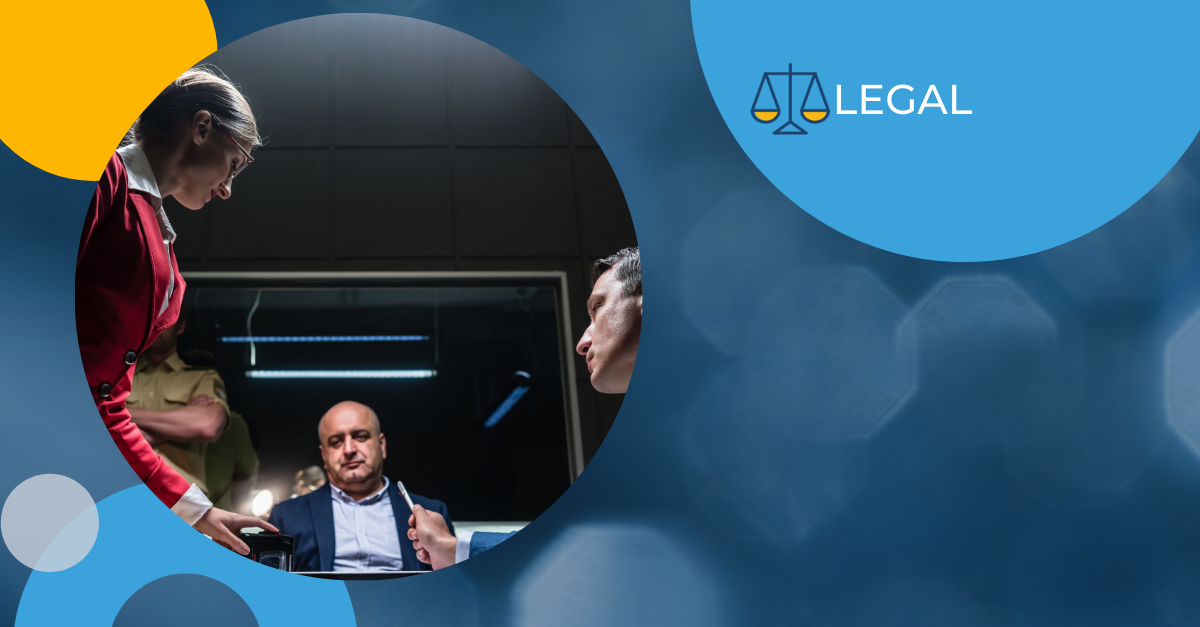
Legal interpretation comes with a unique set of challenges. While accuracy is essential for all translation and interpretation engagements, language choices can carry severe implications in legal contexts. One of the most important ways to ensure quality is to select a proven partner with a solid reputation. Here are some helpful methods to determine if your legal interpretation services partner can deliver.
Is the interpretation company certified?
Certification by third parties is an efficient means of determining that a legal interpretation services provider has been found to meet or exceed the highest industry standards. Interpretation companies can receive ISO certification for translation quality, quality management processes, data protection, and industry-specific standards. Certification is a top priority for Morningside. We maintain the following ISO certifications: 9001 (international quality standard for Quality Management processes and procedures), 13485 (applies to medical devices and suppliers), 17100 (processes and resources related to translation service quality), and 27001 (data protection).
Most courts also offer interpreter certification at the state level. (Note: at the Federal level, only three languages are certifiable: Spanish, Navajo, and Creole.) To ensure quality, prioritize language services partners that can offer court-certified interpreters.
Who is on their client list?
Most legal interpretation services firms cannot share detailed client lists, but you should ask how many top Am law firms are on their client roster. Leading law firms have the resources to work with the best, so language services providers that partner with premier law firms indicate a high credibility level.
We deliver customized legal document translation solutions for 97% of the Am Law 200 and 90+ leading global brands based on the size and budget requirements of individual cases, utilizing industry-leading technology to ensure accuracy, lower costs and faster turnaround times.
Read more: Nuances of legal terminology and the impact on legal translations.
What are their coverage hours?
Legal matters are not confined to business hours, so interpreters must be available whenever needed. Look for a legal interpretation services firm that can provide qualified interpreters after-hours or on weekends. Because circumstances and needs change quickly in the legal field, a reliable interpretation partner has tools and processes in place to respond to change. At Morningside, we re-confirm every assignment the day before, ensure everyone is on the same page, and protect our clients against unexpected charges due to cancellation.
How responsive are they?
Communication should be a top priority for every legal interpretation services firm; poor communication is a sign of a poor partner. Your interpretation partner should respond quickly (under a few hours) and provide you with regular updates during engagements. At Morningside, we use digital tools to track our client response times, revealing areas we can improve efficiency.
Establishing a solid communication process should be a priority to your interpretation partner right from the outset. Reliable firms will want to get to know more about your project and your company so that they can serve you better. At Morningside, we assign a dedicated project manager who conducts an introductory call before sending interpreters out into the field. Prioritizing open communication from the start establishes a strong working relationship and supports a smooth project flow.
Do their interpreters possess subject matter expertise?
Quality legal interpretation requires three crucial factors: foreign language fluency, legal interpretation proficiency, and subject matter expertise. Deposition interpretation services are very different for a basic “slip-and-fall” versus a complex patent litigation case. Ask if your interpretation services partner can provide interpreters who specialize in your specific area of need. The more specialized the interpreters, the more likely you will receive the highest quality interpretation.
Ask your language services provider to outline their process for vetting interpreters. Ensure they confirm the interpreter’s prior legal experience, check referrals, prioritize court certifications, and require their interpreters to possess a minimum of one year of work experience.
The right partner is worth it.
Managing legal interpreters adds another layer to an already complex process. However, partnering with the proper interpretation provider can eliminate logistical headaches and quell any lingering concerns about quality. Take the time to carefully assess legal translation and interpretation partners before initiating an ongoing engagement. The questions above will help you evaluate whether a particular company will make a reliable long-term partner.
Want to know more about our legal interpretation expertise? Contact Morningside today to start a conversation.
Get the latest insights delivered to your inbox
Managing the Cross-Border Regulatory Process for eDiscovery
Managing the cross-border regulatory process for eDiscovery and multilingual matters has always been challenging — and to add to it, the exponential growth of electronic data has created mountains of information for legal teams to sift through.
Challenges come from every angle during the eDiscovery process. They can include differences in data privacy laws, or obtaining electronically stored information from multiple jurisdictions with different laws and regulations for every country the data exists. To complicate matters further, cross-border disputes often involve multiple languages.
Your foreign language documents can add significantly to the cost, complexity and lead time for your eDiscovery project. Tight budgets and deadlines place additional stress on legal teams already bogged down by the litigation process.
If you are a legal professional working in the litigation arena, multilingual documents unearthed during discovery present unique challenges, and the pure volume of documents alone can be overwhelming.
This complimentary white paper, ‘Challenges in Cross-border & Multilingual eDiscovery’ discusses these challenges and outlines best practices to help you implement an effective and smooth process for difficult cross-border and/or multilingual litigation.
Challenges in Cross-border & Multilingual eDiscovery
In our newly updated guide face regulatory challenges head-on:
- Cross-border regulatory challenges
- How to lower costs
- Adding ELM software to your workflow
Attorneys and legal operations departments have relied on Morningside to manage their multilingual discovery for over 20 years. Let us put our expertise to work.
If you’re starting a new eDiscovery project download our guide today. For more information on eDiscovery, contact us
Get the latest insights delivered to your inbox
Quality Management in Legal Document Translation
For legal professionals navigating complex multilingual matters, moving forward without a well-crafted legal document translation project strategy can feel a bit like walking into a minefield. Failure to accurately translate legal documents can result in damaged attorney/client relationships, contract invalidation, adverse rulings and more.
Legal document translation strategies, of course, vary depending on the documents involved and the use case. And, the level of translation detail will vary based on each document’s end-use. Whether you’re dealing with discovery documents, court records, depositions, contracts or interview transcripts, knowing the intended use of each document will help prioritize your workflow.
Here are some recommendations to achieve—and maintain—the highest possible quality level across all your legal document translation project:
Determine the ultimate use of the translated document
Approach every legal document translation project with a clear understanding of where the document will ultimately be used – and share this information with your translation provider early on. Knowing your intended use case will help save time and ensure all documents are translated according to jurisdictional requirements.
For example, during discovery, simple machine translation can help you get the gist of multilingual documents and help you cull through large data sets more quickly. Once you’ve identified the documents you need, you can focus on quality. Some courts will require certified translations, which attest to the translation’s accuracy, paving the way to submit the document into a legal proceeding. Other instances may necessitate authenticated translations, which attest to the legitimacy of the translator via notary signature. International and US jurisdictions have varying requirements for certified or authenticated translations, so it is essential to know exactly where and how you plan to use each document.
Utilize a project management system
Many language service providers (LSPs) use project management systems for progress tracking, deadline management, collaboration, and more. Knowing the status of every document enables your project managers to direct their attention to more complicated or time-consuming document translations. And reliable project management systems help control timelines, budgets and accuracy. Most reliable translation partners should have platforms and tools that empower you to track your projects easily.
Select a translation partner with a verified quality management system
All translation providers have a baseline level of quality assurance, but not all companies dedicate a department to quality management. Look for partners who are committed to quality management and can walk you through their process for ensuring accuracy and preserving quality.
A partner certified to the latest ISO standards means that their processes are tailored to protect the quality of every translated document.
Take advantage of CAT tools
Quality translation requires experienced human translators, but utilizing computer-assisted technology (CAT) tools can also help ensure consistency. Translation memory tools, like the industry-leading software MemoQ, help store specific phrases to deliver consistency across projects. This can be especially important when translating legal documents.
Partnering with a language service provider specializing in terminology management and glossary tools can also help increase consistency across documents and ensure quality outcomes.
Never compromise on quality
Quality management is an essential step in the process of every legal document translation project. Pay attention to the processes your translation partner uses to ensure quality, including project management tools, computer-assisted translation technologies and any applicable ISO certifications. These signs indicate your language services provider takes the quality of their output as seriously as you do.
Are you looking for an experienced legal translation services partner? Start by requesting a quote for your next translation project.
Get the latest insights delivered to your inbox
5 Tips for Pain-Free Cross-Border IP Litigation
The number of patents in force worldwide has nearly doubled in the last decade – from 8.5 million in 2009 to 15 million in 2019. And alongside this boom in granted patents, there’s been an increase in IP litigation. In the US, for example, patent lawsuits were up 9% year-over-year in January 2020. Globally, these cases are also on the rise and can become much more complicated, time-consuming and expensive when they involve parties from different countries.
Fortunately, there are things you can do to make the cross-border IP litigation process less painful – while simultaneously increasing your chances for success. Obviously, hiring skilled legal representation with experience in international litigation is critical. Beyond that, you can save yourself a tremendous amount of stress, time, and money by working with an experienced legal translation service company. Here are five things you can do to ensure your cross-border litigation goes as smoothly as possible.
1. Develop a document inventory
As soon as possible, work with your legal team to compile a list of the documents that will need to be produced during the discovery process. This includes correspondence, supporting materials for depositions, filing documentation, and any other documents you’ll need in court.
Devise a process for sifting and reviewing your documents that works for everyone on your team who will need to access them.
2. Develop a translation strategy
Working from your documents inventory, identify the documents that will require translation (either for your team’s internal use or for delivery to other parties). Engage your legal translation company early in the process and share this list with them, clearly marking any foreign-language documents that will need to be translated and submitted to a court of law, arbitration tribunal, government office or regulatory body. (Those documents will require certified translations.) Then, you’ll need to agree on a delivery schedule for completed translations, and try to allow sufficient lead time to avoid expensive rush charges.
Note: It’s critical that you use a storage platform for translated documents that is secure and yet accessible to your team. Morningside, for example, offers document storage and sharing that’s ISO 27001-compliant, with multi-factor authentication, encryption, and backups to make certain that your materials remain safe and confidential.
3. Develop an interpretation strategy
Identify the in-person or remote proceedings for which you’ll require legal interpretation services (depositions, meetings, hearings, trials). Share that information with your legal translation provider so it can match you with an interpreter with the technical background and subject matter expertise relevant to your case.
Remember: Your interpreters should adhere to COVID-19 guidelines for in-person events. Morningside’s COVID-19 social distancing solutions help ensure the safety of all parties in such settings.
4. Create documents with foreign versions in mind
There are a few things you can do to ensure your English-language content remains effective in other languages:
- Avoid using cultural references and idiomatic phrases that may be unique to American culture and difficult or impossible to translate with the same denotative or connotative meaning.
- Keep sentence structure as simple as possible. Grammatical complexity varies from language to language, and it’s best to start off, at least, with straightforward text.
- Separate text from graphics so that it can be translated without requiring editing of the graphic itself.
5. Reduce the workload with specialized translation tools
For foreign-language discovery documents, ask your legal translation service if they can use specialized tools to cull your large data sets into more manageable chunks of case-relevant information. The application of filtering techniques like foreign language keyword searches, for example, can identify and remove irrelevant documents from the data set. Then machine translation (MT) can be used to determine the “gist” of what each document contains, helping determine which ones require more accurate human translation. For many documents, MT may be sufficient, leading to significant cost savings.
Expertise counts
At Morningside, our experienced legal translators and interpreters are highly qualified linguists with an academic and experiential background relevant to your case. Their skills and subject matter expertise ensure that your translated materials are accurate, and their work is backed by our ISO-certified multi-step quality-assurance system.
Get the latest insights delivered to your inbox
Corporations: Why You Need To Consolidate Your Third-Party Translation Costs

It isn’t uncommon for international corporations to employ an assortment of law firms or outside counsel to meet different local and regional legal needs. In doing so, a significant amount of money will inevitably be spent on legal translation strategy and services for cross-border or multi-country dealings.
Often, corporations leave these legal translations to their outside counsel to handle. While this may seem the simplest solution, it forfeits an opportunity to simultaneously keep costs under control, improve efficiency and data security, and ensure absolute quality across all legal translations. This is where a centralized language service provider (LSP) can make all the difference.
Three downsides to uncoordinated legal translations
A corporation that allows outside counsel to handle its legal translation work faces three distinct challenges:
- Cost — We know of corporations whose network of third-party attorneys contracted up to 140 different translation services in 2021 alone. That’s a significant annual spend! Unfortunately, with translations spread out this way, a corporation has no visibility into cumulative expenditures – let alone an opportunity to benefit from the discounts that such a hefty billing should merit.
- Quality — With each law firm (presumably) vetting and hiring its translators, the corporation cannot guarantee consistent terminology or accuracy in the translations upon which its business activities heavily rely. In addition to bearing the potential for undermining the success of current activities, inaccurate translations in legal documents can lead to significant problems in the future and potentially hurt your corporation’s reputation. As it has been proven time and time again, word choice can mean everything in litigation, and with each local law firm hiring a different translator, the corporation lacks the means to mitigate such risks comprehensively.
- Vetting — Lastly, there is no way to be confident that third-party agents are selecting translators strictly based on quality and pricing and not due to some unstated relationship that has nothing to do with the corporation’s interests.
Five benefits of a consolidated legal translation strategy
Corporations that choose to consolidate their legal translation services under a single LSP benefit in the following five ways:
- Translation projects gain enhanced transparency — On a micro-level, the corporation gains the ability to track the progress of translations during production and to make last-minute changes should a legal strategy shift occur. On a macro level, the large amount of work being tracked across the organization, when combined, can qualify for significant cost savings.
- Accountability becomes straightforward — By selecting a certified translation service with rigorous internal quality control processes, the corporation recovers control of translation quality, thus ensuring that all legal translations are produced at the highest level and with the maximum protection as they guard against future issues.
- The corporation gains control of consistency — Corporations can work with LSPs to create customized glossaries that will ensure the constant and correct use of preferred terminology for products and other standard references in every relevant language.
- Translation memory discounts — Over time, an LSP will be able to incorporate dedicated translation memory tools for further cost reduction through efficiently re-using previously translated material. The longer the relationship between the corporation and the LSP, the larger the company’s translation memory grows and the greater the savings that can be achieved.
- Centralized & easily repeatable processes — An LSP’s account services may be able to lead the corporation through each project, consulting on best practices and providing advice that helps ensure friction-free, strong, and successful legal translations.
Taking control of translations
International corporations who use outside counsel can make use of these benefits without causing any complex internal changes or creating any additional work for counsel. Choose a reliable and experienced LSP to handle organization-wide translations and then tell each law firm under contract to obtain all future legal translation services from that LSP. Outside counsel can instruct the LSP on your behalf, which will immediately achieve greater efficiency, consistent quality, and cost savings for your corporation.
About Morningside
Morningside, a Questel Company is a recognized leader in comprehensive legal language solutions and eDiscovery services for the legal industry. We provide the world’s largest law firms and corporate legal departments with a full suite of services, ranging from legal document translation, contracts and compliance documentation to full-scale multilingual litigation requiring certified translation and foreign language document review to supporting complex eDiscovery projects. We deliver customized legal document translation solutions based on your case’s size and budget requirements, utilizing industry-leading technology to ensure accuracy, lower costs and faster turnaround times. Find out why 97% of the Am Law 200 and 90+ leading global brands rely on Morningside.

Dylan Blaney, Vice President of Business Development, Morningside, a Questel Company, is responsible for the company's global legal translation strategy and maintaining relationships with the world's largest corporate legal departments and law firms. Dylan expertly advises law firms and corporations on best legal translation practices, specifically implementing workflows and technology that reduce cost, improve quality, and accelerate deadlines. He specifically focuses on international litigation & arbitration, FCPA, patent litigation, M&A, internal corporate communication & documentation to ensure adequate global communication in the legal marketplace.